RememberingA learner asks
Why do I know it when I study and then blank on the test?
What may be going onKnowing something while you study and recalling it on a test are different skills, and recalling gets stronger with practice.
For everyone who supports a learner
Simple enough for a student, sophisticated enough for a specialist.
The Learning Framework® is a model of the five conditions every brain needs in order to learn, built on the neuroscience of how learning happens. A learner of any age can use it to understand their own brain, a parent with no background in education can use it at home, and specialists use it to explain what they already know in words a family can follow. When everyone around a learner shares it, you can see which condition for learning is not being met and respond together.
Does this sound familiar?
Even inside one school, educators are often working from different models of how learning happens. Then a parent joins the conversation, along with school specialists, outside providers, a tutor, a pediatrician, and the learner. Each person brings knowledge and care, and each person describes what is happening in different terms. When everyone sits down to solve a problem together, it is hard to agree on what is going on, and the plan that comes out can pull in several directions at once.
What may be going onKnowing something while you study and recalling it on a test are different skills, and recalling gets stronger with practice.
What may be going onAttention follows what the brain finds relevant, and you can build that into any lesson.
What may be going onRemembering a task at the right moment is an executive function skill, and it grows with support.
What may be going onSticking with hard work depends on feeling safe to make mistakes, and that safety can be built.
Each person is working hard, and each one learned about learning from a different source, so there is no shared understanding to start from. Even the textbooks used to prepare teachers left this out: in one review, 0 of 48 gave even minimal coverage of the research-based strategies for how people learn (NCTQ, 2016).
When everyone learns the same five conditions, the conversation starts from the same place.
What finally brings it together
Every brain needs these five conditions in order to learn. Once you understand them, any struggle you see connects back to one of them, and everyone around a learner can name which condition is not being met, agree on a response, and support it from their own role, at home, in the classroom, or in a therapy session. I built The Learning Framework® from peer-reviewed neuroscience, more than 20 years in diverse school communities, and my experience as a mother.
How we work together
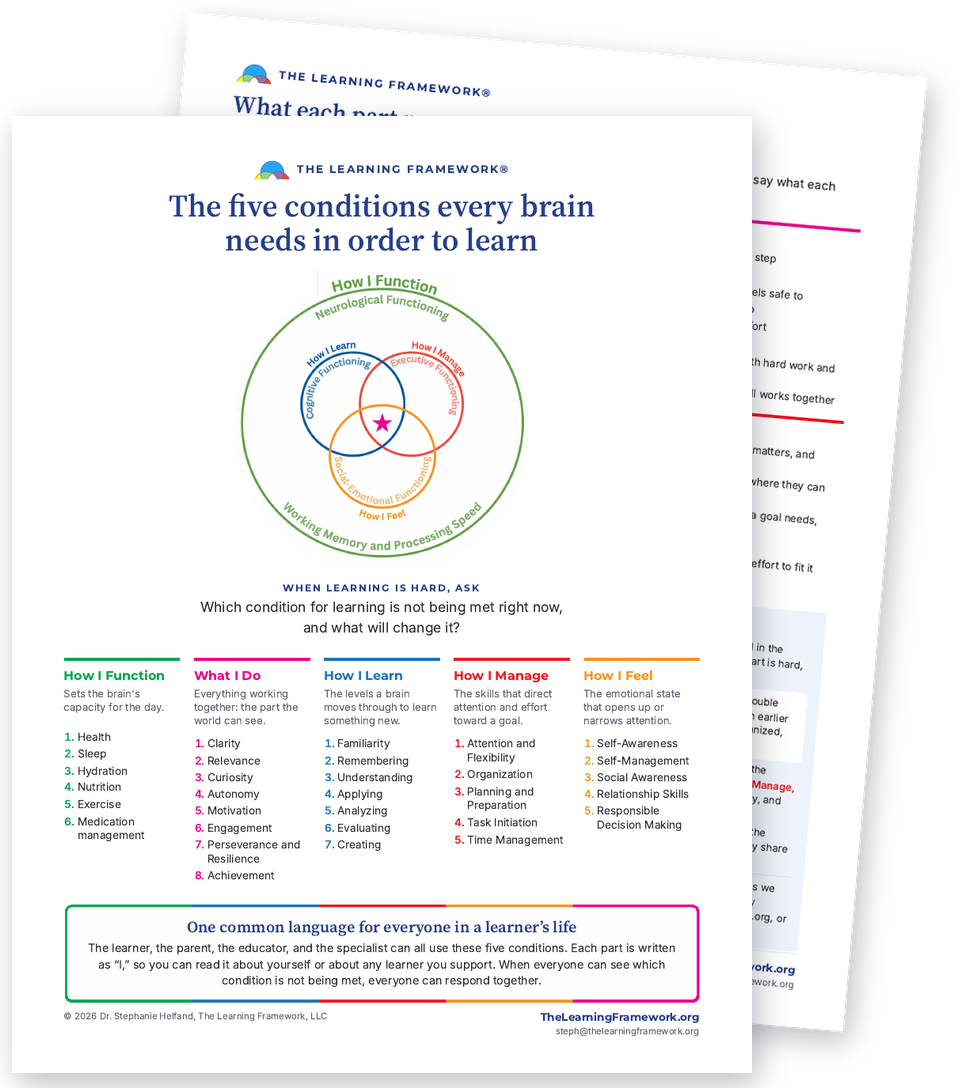
Sets the brain's capacity for the day, through sleep, nutrition, hydration, exercise, and health.
The levels a brain moves through to learn something new, from hearing about it for the first time to becoming an expert.
The executive function skills that direct attention and effort toward a goal.
The emotional state that opens up or narrows attention.
Everything working together, the part the world can see, like motivation, engagement, and achievement.
Ways to start
A learning simulation and the five conditions, on Saturday, November 7 or 14.
See the dates Chicago · 4 days · summer 2027The whole system in 4 days, including what to expect from the brain at every age from birth to 26.
Share your interest Schools, practices, and familiesSessions for educators, specialists, families, and learners, so everyone shares one common language.
See ways to work togetherExecutive function is the topic people ask me about most. Read about the five executive function skills.
I have sat in both chairs
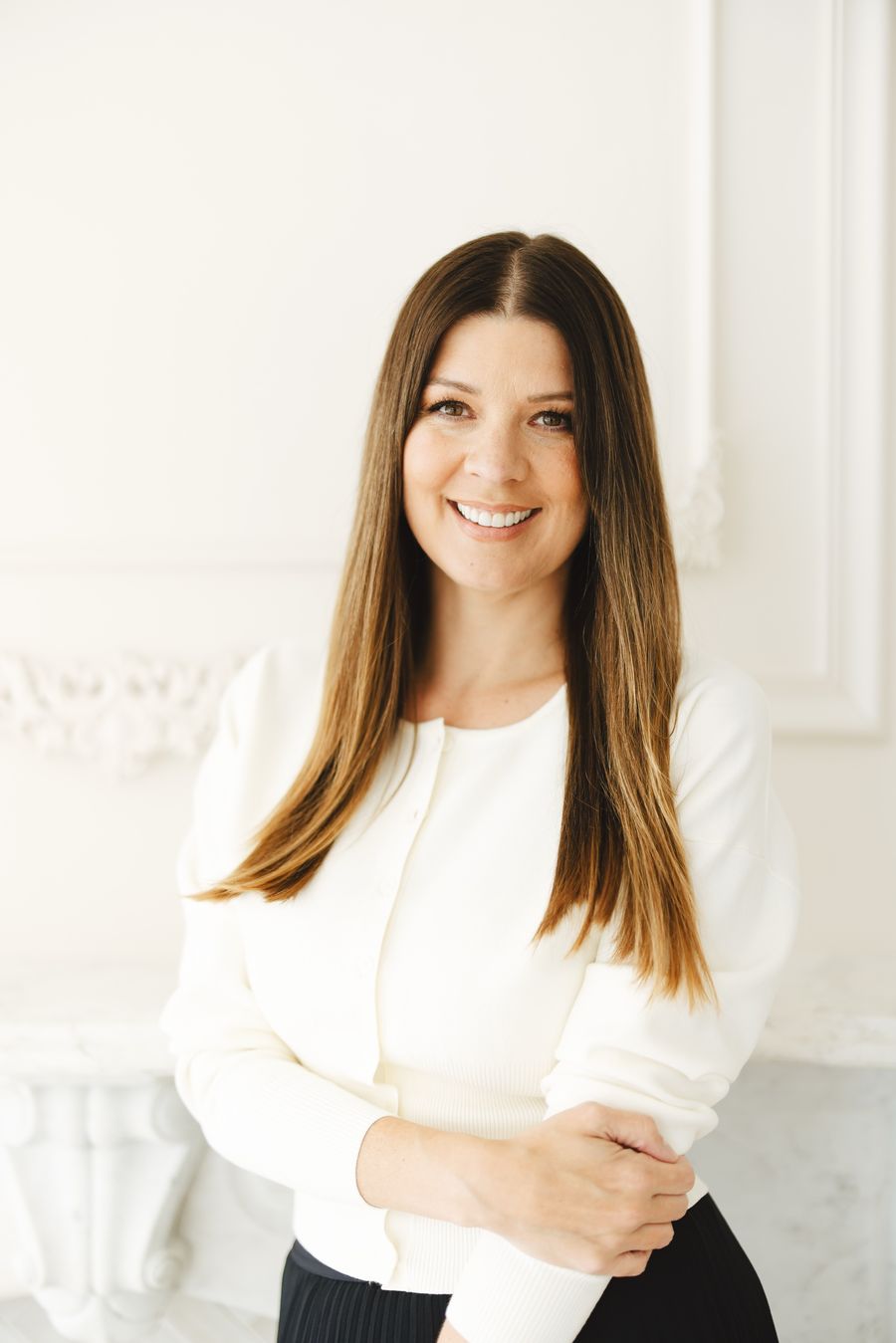
I have sat on both sides of the table. As the mother of two neurodivergent children, I have been in meetings where everyone cared and everyone described my child in different terms. As a special educator, a classroom teacher, an instructional coach, and a principal on Chicago’s North Shore, I have led those same meetings inside my own school.
That is why I built The Learning Framework® from the peer-reviewed neuroscience of learning and more than 20 years of practice. All brains are born to learn and achieve, and my work is helping the adults around a learner create the conditions that allow it.

Dr. Stephanie HelfandFounder and Creator of The Learning Framework®
Free guide
It shows the five conditions every brain needs in order to learn, explains each part, and gives you the question to ask when learning is hard. It is written so the learner, the parent, the educator, and the specialist can all use it.
Start the conversation
Share a little about the learners you support and what is going on, and I will reply within a few days to set up a time to talk. I am based in Chicago, Illinois, and I am glad to travel. The 2026 to 2027 school year is fully booked, and I am now booking summer 2027 and the 2027 to 2028 school year.